Showing posts with label AC. Show all posts

Wednesday, July 16, 2025

Acrolink 7N-PC4030 Purosangue power cable

Introduction

The 4030 has enjoyed great commercial success, thanks to its reasonable cost and great performance. Availability in bulk-wire form has also left audiophiles free to express their creativity with custom lengths and terminations. Looking back at my old articles, I first wrote about the 6N-P4030 in 2008, followed by the 7N-P4030II, Anniversario and Leggenda in 2011, 2017 and 2020, respectively. 

Evolving over the years, the Purosangue sounds significantly different from the Genesis model. It is therefore timely to introduce the 7N-PC4030 Purosangue. In Italian, puro sangue means pure blood. 


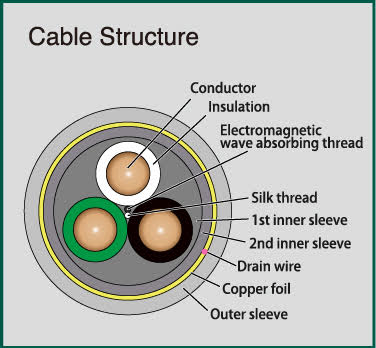
Let’s have a look at the cross-sectional view of the Purosangue and the Leggenda, which precedes it.


PUROSANGUE 
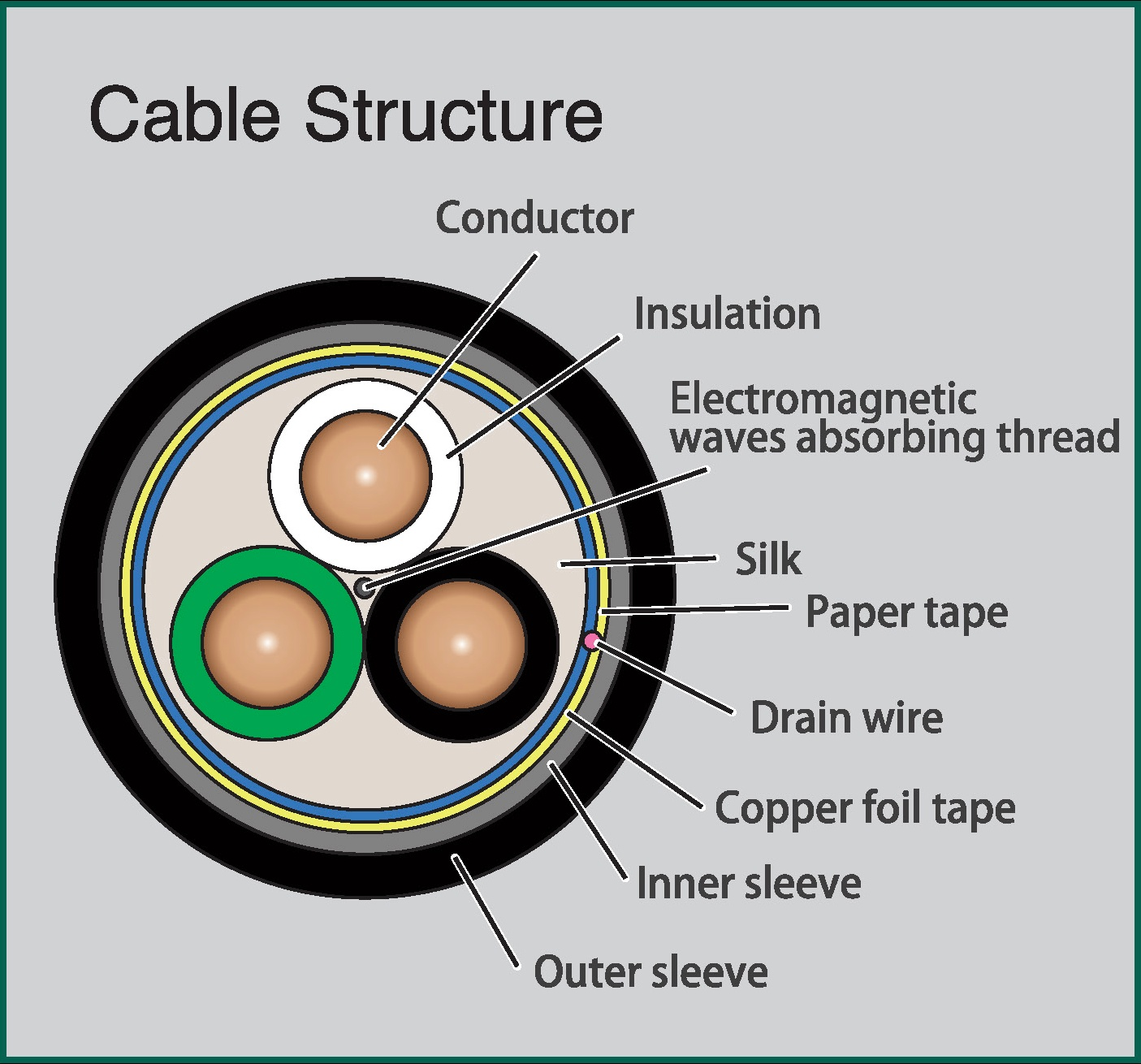

From Acrolink's official website.

LEGGENDA


From Acrolink's official website.


Like the Leggenda, the Purosangue is a 10 AWG power cord based on 7N purity D.U.C.C. copper wires (Live and Neutral) and 4N copper conductors (ground).


Visually, the biggest differences are the change from the glossy cream PVC outer jacket to matte black Polyolefin, and the striking blue Duralumin connectors in a shade similar to Blu Tour De France (I saw what you did there Acrolink!).


Internally, the single silk thread running in the center of the Leggenda now fills the space between the outer jacket and the conductors. 


The connectors share a similar design to the plugs used in Acrolink’s flagship Mexcel range save that they are shorter and omit the carbon fiber sleeve. Like the plugs used for the Leggenda, the Beryllium copper blades are Rhodium and Silver plated. 


Purosangue (top) vs Mexcel 8N-PC8100 (bottom).


In Use


The Purosangue has a similar diameter to the Leggenda, and is just a shade thinner at 14.7mm  diameter (vs. 15.7mm). It is also more flexible, but in practical applications, the cables route and handle similarly.


The black Polyolefin outer jacket scuffs more easily compared to the PVC material used for the Leggenda. From experience with other Acrolink models, it will become a bit sticky in Singapore’s tropical weather over time, and the cable lettering rubs off easily too. 


No stress here except for the lettering.

Sound


The Purosangue was tested in both my main and secondary setup. In my main setup, the cable was used with a Conrad Johnson ART27A power amp, and a Gustard A26 DAC. In the secondary setup, the Purosangue was connected to a Schitt Aegir power amp. The sonic differences were more stark in my main setup while the Schitt Aegir seemed less sensitive to power cord changes.


Tonally, I found the Purosangue quite close to neutral, with a slight bias towards warmth. The signature Acrolink strengths are there in spades, with extended and silky highs and refinement across the frequency spectrum. The Purosangue distinguishes itself from earlier models with a tight and propulsive bass, much improved dynamics and a sharper edge. The forceful bass reminded me of some of the Mexcel models, but in a lesser dose. The extra bass weight, together with the denser tone makes this the warmest sounding 4030 variant to date. 


Midrange performance is smooth and fluid like the Leggenda, but with more detail and expressiveness. The image size of vocalists is tighter and more focused than the Leggenda but not as pinpoint as the Anniversario. If the Leggenda could be said to be voiced like a tube amp, then the Anniversario would be likened to a good class A/B solid-state amp, and the Purosangue, a class A solid-state amp.         


Compared to the Leggenda and Anniversario (both terminated with Oyaide AP/C 004 plugs), the Purosangue sounds quicker, more dynamic and with higher tonal contrast. The soundstage is more deeply layered, which gives superior perception of depth and dimensionality. Returning to the Anniversario and Leggenda confirmed that the two older cables sounded spatially flat in comparison.


An Acrolink Mexcel 8N-PC8100 Performante power cord served as the final comparison. The Mexcel was superior in every way, but I was impressed at how much fight the Purosangue brought to the ring. It wasn’t a first-round knockout, and the Purosangue kept the Performante on its toes for a few rounds before deciding to surrender. The Mexcel’s low noise floor, dynamic power and microdetail was something that the Purosangue couldn’t match. However, value-wise, the Purosangue wins hands down.


Technically, the Purosangue significantly betters its predecessors. Audiophiles sensitive to brightness may prefer the more organic sound of the Leggenda, but the Purosangue should be a good upgrade for most 4030 owners.  


Conclusion


If you want close to Mexcel performance, but don’t wish to spend that kind of money, this should be at the top of your shortlist. The Purosangue compromises little and should fit comfortably in most systems. It’s nice to see that Acrolink continues to push the boundaries of performance for its more modest models. 


Thank you X-Audio for arranging for this review.  


Acrolink 7N-PC4030 Purosangue power cable

Promotional Price

1.5m factory terminated cable - S$980

Bulk wire - S$250/m


X Audio 

201 Henderson Road

#06-13/14, Apex@Henderson

Singapore 159545

http://xaudio.sg


Saturday, November 7, 2020

Acrolink Mexcel 7N-PC9900 Power Cord

Introduction

The 7N-PC9900 is the latest version of Acrolink's flagship power cord, replacing the PC9700. According to Acrolink, the PC9900 is an upgraded version of the PC9700 and features new special shielding technology. 


Description

Visually and reading off the specifications sheet, the PC9900 and PC9700 are near identical twins. The Live and Neutral conductors are the same D.U.C.C. Stressfree 7N wires consisting of 50 strands of 0.32 mm diameter conductors, while the ground is similar except the wires are made from super-anneal 4.5N copper. 

The shield is described as polyurethane enameled 4N copper braid with special shielding technology - carbon fabric sleeves. In comparison, the PC9700 uses the same copper braid combined with semi-conductive carbon tape. 

Otherwise the PC9900 looks and feels the same, with a diameter of 16 mm and identical resistance and capacitance values. 


I no longer had the PC9700 on hand so I could not compare the two models. Instead, I used the 8N-PC8100 as a baseline for comparison instead.

Sound Quality

Acrolink Mexcel users expect the finest levels of resolving power and suppressed noise floor, which the PC9900 delivers in spades. 

The PC9900 has extremely high levels of resolution across the frequency range, with tight and powerful bass lines, and high frequencies that are extended and clean. In typical Mexcel fashion, this is delivered in very quick and focused transients, with a natural decay. Due to the very low noise floor, the PC9900 is almost like delivering a jolt to your system, giving it a sudden boost in contrast and dynamic range. 

Tonally, the PC9900 sounds similar to the PC9700 (based on memory). A quick read of my previous review of the PC9700 provides more insight into the character of both the PC9700 and PC9900. However, the PC9900 offers subtly improved resolving power with a little bit more focus and drive. I noticed that the Mexcel twins differ in how the human voice is presented. While both cables have more sweetness in the midrange compared to other Mexcel models, the PC9900 has a silkier and more fluid delivery. However, this comes at the expense of some snap and presence.

Comparisons to the PC8100 proved interesting. Unlike the PC9700, I would consider both the PC8100 and PC9900 to be on par with each other. The PC9900 is like using a computer monitor with higher resolution. The PC8100 makes do with lower resolution, but with more colour contrast, and a slightly warmer hue. Your choice of poison boils down more to taste. If you like a bolder presentation with more meat and flavour, the PC8100 fits the bill. The PC9900 is perfect for the palate that favours microdetail and a more refined and sophisticated presentation. If you like your Japanese whisky, think of the PC8100 as Nikka, and PC9900 as Yamazaki.

Conclusion

Acrolink Mexcel power cords are one of the finest products in the industry and come with a strong personal recommendation. While they are expensive, the level of performance delivered is very reasonable. I would have hesitated to say this some years ago, but a quick look at audio magazines and websites shows that flagship cables from the competition can even cost multiples of the PC9900 - Highly Recommended.

A big thanks goes out to X-Audio for arranging for the review sample.


Acrolink Mexcel 7N-PC9900 Power Cord
Price : S$ 5,500


X-Audio
1 Jalan Anak Bukit 
#01-01S, Bukit Timah Plaza
Tel : 64662642


Sunday, March 29, 2020

Acrolink 7N-PC 4030 Leggenda Power Cord

Introduction

The PC 4030 is the workhorse of the Acrolink power cord range, being affordable and offering great performance for the money. Available in off-the-reel form, you can choose to terminate it with the plugs of your preference. 

I had previous written about the original 6N PC-4030, 7N PC-4030 II and the Anniversario. The Leggenda is the latest version of the PC 4030. Let's see whether this is destined to be the stuff of legends.

Description

The Leggenda uses the same copper conductors as the Anniversario - 50 strands of 0.37 mm diameter strands of 7N DUCC copper for the Live and Neutral conductors, and 4N copper for the Earth conductor. However, squalene oil is applied to each strand of copper. Squalene oil is a popular ingredient in skin-care products, and it's use for Audiophile products is not new. Furutech and Nanotec have been using squalene in some of their products for many years, albeit with added precious metal particles suspended. I sincerely hope no sharks were harmed in the production of these cables - shark liver is a rich source of squalene and is a traditional harvesting source.

Otherwise, the Leggenda is physically similar to the Anniversario. It is as flexible and easy to handle, despite being slightly thicker (the Leggenda's jacket has a diameter of 15.7 mm, vs 14.7 mm for the Anniversario). The shield is a thin copper foil, with a fine drain wire that is designed to test your dexterity and skill as a cable ninja. I terminated a 1.5 m cable with Oyaide A/P 004 plugs, with the drain cable attached at the AC outlet end. I happened to also have the Anniversario on hand, terminated with the same plugs.  

Sound Quality

Squalene treated cables have a polished and wet signature to them, and the Leggenda exhibited a similar tone during the first few days of run-in. Unlike Nanotec and Furutech cables, the Leggenda has a more agile feel, with a less intense golden glow. The tone continued to lighten and stabilised after a few weeks of use (including a few days with dedicated burn-in devices).

The Leggenda has a balanced tone, much like the Anniversario, with an even hand throughout the frequency range. Once fully run-in, the effect of the squalene is very subtle and best described as a natural sounding flow between notes. If you found the Anniversario too dry, and the older 6N and 7N versions of the 4030 too wet, this is probably just right.

I also found the Leggenda to have more push and dynamic contrast. Bass had that little bit more power and authority, while music had a more incisive edge to it. In a way, the Leggenda moves closer in quality to the top-drawer Mexcel series, although it lacks the level of quietness of Mexcel cables. Typically improvements of this nature come at a price - forcefulness requires a trade-off from musicality and midrange smoothness. The fact that Acrolink managed to avoid this is a certain indicator of fine audio wizardry.

Resolution wise, this has a slight edge over the Anniversario, with better retrieval of micro details, and a more expressive midrange. Soundstaging is also wider, although this may be component dependent. It is very noticeable when used on my amplifier, but less so with my Melco NAS / streamer. 

One key difference is vocal reproduction. The Leggenda has more midrange presence, with slight warmth and an innner glow. As mentioned earlier on, this is done without any smoothing over - the human voice remains communicative, expressive and detailed. 

The evolution of the 4030 range is an interesting one. The 7N-4030II in my view, remains the most musical albeit coloured cable. It has the silkiest high frequencies, with very prominent air and decay. The Anniversario has the most "studio-like" tonal balance with a drier and more analytical presentation. The Leggenda sits squarely between the Anniversario and 7N-4030II, with a judicious mix of both of their strengths.

Conclusion

Taste will very much determine which 4030 model is your pick. The Leggenda is my pick and caters best to my taste. Considering that the price increases over each model have been very modest despite large strides in improvement, the Leggenda is an unequivocal Best Buy. Outstanding performance at a great price - that is definitely the stuff of legends !  

Price : TBD

X-Audio Pte Ltd

Bukit Timah Plaza
1 Jalan Anak Bukit #01-01S
Singapore 588996
Tel : 6466 4624     


Thursday, December 5, 2019

Plixir Cube 8 BAC Power Conditioner

Introduction

Our very own home grown brand is back with a new series of balanced power conditioners. According to James Soh, Plixir’s owner and designer, the Cube series was introduced to offer a premium product to customers that wanted a very high quality power conditioner, but were unable to afford the top-of-the-line Elite series of products.

The quality of finish of the Cube is top-notch, and a far cry from Plixir’s first models and significantly better than the present Elementa series. In fact, it would be fair to say that the level of finish and build is on par with the Elite series. However, to bring the product to a lower price point, the Cube uses a more affordable Noratel transformer that uses trickle-down technology from the Elite’s XQ transformer.

Size wise, the squarish footprint (240 x 270 x 245 mm) of the Cube enables easy placement and economical use of Singapore’s very expensive real estate space. It’s diminutive size is deceptive though, and the Cube weighs a back-breaking 30 kg. 

The model on review offers 8 outlets of your choice (US, EU or UK) and supports equipment with total power of 2280 watts. A binding post is also offered in case you wish to ground any of your components to the Cube.

Like the rest of the Plixir models, the Cube runs warm to the touch (I measured about 8-9 degrees Celcius above ambient temperature) on standby. My review sample did not have any noticeable transformer hum or buzzing. 

Sound Quality 

My initial impressions of the Cube were very positive - an extremely low noise floor and powerful bass. I initially thought that the Cube even exceeded the Elite series in this regard. However upon extended listening, I found this to be not the case for reasons explained later.

Sonics wise, the performance of the Cube sits squarely between the first generation Elementa (I did not have the current Elementa series on hand for comparison) and Elite series. Tonally it is not as neutral and has a pronounced bass emphasis and darker midrange and top-end. While the basslines from the Cube appeared more impressive than the Elite at first, I found that the bass was not as tight and lacked the articulation and detail of the Elite. Double-bass had impact but you could not hear the inner detail  - you heard more of a single note rather than the resonance from the body of the instrument and the vibrating strings. Similarly, the midrange and treble were smooth and refined, but lacking in the last bit of inner detail, expressiveness and air that only the Elite could deliver.

For most audiophiles, the Cube would be more than enough. I could have lived happily with it had I not personally owned the Elite BAC - perhaps ignorance could be bliss for an audiophile. 

Cube or Elite ? The choice to me very much boils down to matching. Audiophiles who find their system too lightweight and shrill would love the Cube. Audiophiles who have dialled-in their system to perfection would be better off with the Elite. Like everything in hi-fi, horses for courses !

Conclusion

The Cube fits nicely into the gap in the Plixir series. The Elite BAC still remains at the top of the heap, but the Cube remains a very worthy model for consideration, especially in the right system. The high level of finish, compact footprint and competitive performance means that the Cube deserves a HIGHLY RECOMMENDED label !

Cube 8 BAC
S$3,300


Saturday, April 27, 2019

Acrolink 8N-PC8100 Performante Power Cable

Introduction

Just worked yourself to the bone saving your precious pennies for the flagship Acrolink 7N-PC9700 power cable ? The bad news is that Acrolink has launched a limited edition model, the 8N-PC8100 Performante Cable. I certainly didn't see this coming, especially so soon after the launch of the 7N-PC9700 ! Such is life, and we can only see whether this new model (limited to only 99 pieces in the world)  will dethrone the King of the castle.


Description


Acrolink has somehow managed to retrieve enough stressfree 8N copper material from it's secret vault to launch this limited edition series (the current lineup uses 7N DUCC conductors). Technically, the PC8100 is closer to the PC6700, with both using 50 strands of 0.37 mm diameter copper conductors for neutral and live conductors, as well as polyolefin, tungsten and amorphous powder as filler (the PC9700 included carbon powder). The shield is different, with the use of copper foil tape and silver plated copper braid, instead of carbon tape and enameled copper braid on the PC9700.


Visually and handling wise, the PC8100 and PC9700 are similar, with identical plugs, and flexibility (or lack thereof).


Pricing will depend on your market, but be assured that the PC8100 will cost significantly more than the PC9700. In Singapore, the local dealer X-Audio is offering this cable for S$ 5,500 (or about slightly more than US$ 4,000).

Sound Quality

Admirers of the Acrolink Mexcel house sound will not encounter any surprises - the PC8100 treats it's audience to extended and silky highs, with a refined presentation that is precise and quiet.

A concise way to describe the PC8100 is that this is the progeny of a union of the PC9500 and PC9700, with a well-struck balance that highlights the strengths of both Mama and Papa cable. The PC8100 has the well-defined strength and muscularity of a bodybuilder, and the speed, elegance and grace of a ballerina ! Click on these links to see my previous reviews of the PC9500 and PC9700.  

But stopping short at this description would be doing the PC8100 a disservice - it is able to do everything slightly better than the PC9700, with a slight edge in resolution, micro-detail and background quietness. Throw in the low frequency authority and dynamics of the PC9500, and you have it all - at a price (financially). 

Your choice of poison really depends on taste. The PC9500 has the most powerful sound, albeit with a more raw edge to it - perfect for the rockers. The PC9700 has the most laidback and sweet tone - perfect for small scale jazz and classical works, or vocals. The PC8100 takes the middle road, which is great if you listen to both ends of the spectrum, but an audition is a must - it may be too polite for the headbangers and too forceful for the pipe and slippers crowd. The level of improvement compared to the PC9700 is more evolutionary than revolutionary, and the PC9700 owners should be able to sleep soundly at night. For the prospective Mexcel purchasers sitting on the fence though, this cable is really the one to have in my view.

Conclusion

The PC8100 demonstrates Acrolink's commitment to pushing the envelope of what is possible from power cords. If you move fast, you just could be one of the lucky owners of this limited edition flagship cable. A big thanks goes out to the guys at X-Audio for making this review possible.


Acrolink 8N-PC8100 Performante Power Cord
Price : S$ 5,500 

X-Audio Pte Ltd
Bukit Timah Plaza. 
1 Jalan Anak Bukit, #01-01S
Singapore 588996
6466 2642 


Friday, December 22, 2017

Oyaide Armored Series IEC / AC Plugs

Introduction

Oyaide has just released a new line of AC and IEC plugs. It's been more than a decade since they launched their original lineup of premium AC and IEC plugs, so it is nice to see that they are not resting on their laurels.

The three model lineup consists of the AP/C-004, 037 and the 029. Sharp eyed readers will notice that two models models has been omitted, the 046 and 079. So, that leaves you with the two choices of plating, silver / rhodium, and platinum / palladium.

Here is a quick comparison table :-

Model  Blade Material       Plating

029      Brass                     None
037      Phosphor Bronze  Silver / Rhodium
004      Beryllium Copper  Platinum / Palladium

Oyaide and their local dealer X-Audio were kind enough to supply me with their new plugs, as well as the original versions for comparison purposes, and enough bulk cable (Oyaide Black Mamba V2) to hook everything up. Me old fingers will take a while to strip and terminate everything, so please be patient in the meantime.


Comparison of the armored AP-004 (top) with it's predecessor, the P-004
Teardown of the AP-004

A close-up view of the front housing

The new "floating" cable clamp
Cable clamp of the P-004

Rear housing


AP-004 (left) vs P-004 

Initial Impressions

Readers expecting the new plugs to be massive machined pieces like some of the competition out there will be sorely disappointed. Weight wise, there isn't any noticeable difference. The AP-004 weighed in at 65 grams vs 60 grams for the P-004.

Visually, the star-shaped terminal clamp is much thicker. The three piece body also feels more sturdy, with the pressure exerted by the screws more evenly distributed. Both the front and rear screws are secured through the metal insert in the midsection. A quick test with a multi-meter confirms that the plugs when assembled, the screws are fully conductive from rear to front screw. The next surprise is that the plastic body is conductive too. A quick check on Oyaide's website confirms that the polycarbonate is actually metal film deposit infused. It is not connected to protective earth though.  

A big thumbs-up goes to the "floating" cable clamp. The previous design had an annoying habit of pushing the cable off-center, and putting unnecessary pressure on the cable and weakening the mechanical connection between the star-shaped terminal clamp and the bare wires. I never really tightened down the cable clamp on the old design for that reason. The new cable clamp "floats" and is therefore self-centering.

You may also notice that the cut-outs for accessing the terminal clamp are larger now, and the clearly labelled as Earth, Live and Neutral. Hardcore DIYers have such information etched into their brain and can recite this in their sleep, but it is a nice touch nonetheless. Even nicer is the supplied instruction manual that is so detailed that it lists maximum torque for tightening each screw, and even recommended screwdriver sizes and brands. You really can't get more detailed than that !

004

Luckily for users, the double "0" does not refer to a licence to kill - we all want to enjoy our hobby for many years to come. The original 004 was a bit polarising, you either loved it or hated it, thanks to an extremely unforgiving level of resolution coupled with a slightly cool / analytical tone.

The AP/C-004 on the other hand is a much more likable plug. It does not sound drastically different from the P/C-004 but improves on it's resolving and focussed character. The Armoured plugs go deeper and tighter in bass notes, while mid-bass has a subtle sweetness and fullness. This was very obvious on the Oyaide Black Mamba V2, but not so obvious on the Acrolink 4030 Anniversario power cord. Midrange has a softer and gentler character, while high frequencies are both neater and more refined. I always considered the P/C-004 to be a poster child for neatness - very tidy imaging and soundstaging - everything being neat and stable. However, the Armoured plugs just go that extra mile and bring noticeable improvements in those areas !

It's difficult going back to the P/C-004 after hearing the benefits of the Armoured plugs. Well worth the extra expense in my opinion.

M1 / F1 dethroned ?

Does this mean that the M1 / F1 is no longer the king of the Oyaide castle ? Surely, Oyaide will have a new and improved version of the M1 / F1 soon ? Curiosity never did kill this cat, so I decided to terminate some Mamba cable with my personal set of M1 / F1 plugs.        

To be continued ...

Thursday, April 7, 2016

Sablon Audio - Corona Reserva power cord and Panatela Reserva speakercables

Introduction

I asked Mark Coles of Sablon Audio to tell me a bit more about his company, his design philosophies and sonic goals. Here is his response in verbatim,

"Sablon Audio started five years ago, when its founder Mark Coles reached the stage in life where he believed he could make better high end cables than the numerous examples he had bought over his audiophile 'career'. Sablon's ambition is to give best of breed performance across all cable applications at a much lower price point than its peers, by removing the distributor function and selling either directly or via enthusiast dealers.

The name 'Sablon' comes from the French word for 'sand', a happy memory of my childhood growing up on the beautiful beaches of a small island called Jersey. The product naming hierarchy is based around cigars since others had beaten me to 'wine' themes! The Panatela range covers the signal cables, whilst Corona is used for the thicker power cables. The latest model range has been designated Reserva as it is an extra special edition. 

All designs are formed using solid engineering principles, and executed with a blend of exceptionally high grade wires and connectors, finished in sonically non-invasive covers. Prototypes are evaluated on a broad range of systems, from Kondo to N-core, from Avantgarde to Zu, from Lampizator to Wadia, by testers with diverse musical preferences. Their insights are collated and evaluated in the context of their systems and tastes, before iteratively progressing towards a final design which will delight the majority of audiophiles. Part science, part art. This approach has been vindicated by awards from 6Moons and Positive Feedback for both the original Panatela / Corona range 3 years ago and again, more recently, for the latest Reserva models.

Key sonic objectives are to achieve exceptionally high level of resolution, whilst maintaining musical engagement and an even response over the full frequency range. This requires a low noise floor and sympathetic electrical characteristics. Sablon doesn't publish test data as I believe that not all that matters measures and that our ears are far more sophisticated measuring devices.

I sometimes use the analogy that designing audio cables is rather like being a chef as one needs to continually sample and adjust seasonings to achieve a desired overall flavour. A key element of my approach is to build Sablon cables by hand from carefully selected individual wires rather than simply chop lengths of bulk cord off a reel. This approach is more time consuming to build but gives more flexibility in finding better sounding conductors. By having a deep understanding of the sonic qualities of each individual component, one is able to combine the virtues of wire / plugs / geometry / cover synergistically. Inevitably, there is a sonic synergy when using a complete loom of Sablon cables on account of shared design values and this also replicates the context in which they have been developed.

The Corona Reserva power cord under review represents several generations of development of the popular Corona model range. I had literally run out of scope to enhance the earlier Gran Corona cord without replacing the wire itself and, essentially changing the DNA of that cable. It was a big step, however a necessary one. I managed to find an exceptionally high purity copper wire with great transparency and musical qualities, and this is deployed in a braided geometry using 7awg / 10mm sq per polarity together with a shielded ground line. A laboratory grade carbon-based noise reduction agent is applied and the exceptional Oyaide 004 platinum / beryllium plugs are fitted. The outer cover is a sleek Havana bronze woven material, with the overall form factor now being slim and highly flexible. As for the resulting sound quality, well I will leave Eric to tell you about this......."

Description

The Corona Reserva power cord and Panatela Reserva speaker cable are quite unusual and stand out in the world of high end audio cables. Both are very light, extremely flexible and easy to route. They also lack the usual macho trappings - no Anaconda girth, nor fancy box / flight case. While these cables are not cheap, they are not exorbitantly priced. If you so wish to purchase them, you need not resort to a life of crime to finance your acquisition. 

The Corona Reserva came finished in a nice fabric cover, and was terminated with the excellent Oyaide P/C 004 plugs. Finishing was professional, with neatly applied heatshrink and construction - no home made looks here.


I really appreciate the flexibility of these cables after having dealt with too many power cords with a mind of their own !


The speaker cables had an interesting feature - short fly leads on the speaker end to facilitate biwiring. My review sample came terminated with spades, and banana plugs for the flying leads. If your speakers are single wired, you can simply attach the flying leads into the main speaker terminal, assuming you are dealing with five-way binding posts. If you have any special needs, get in touch with Mark to have something custom made for you. My review set was terminated with Xhadow plugs, although Mark later informed me that he would be making switch to Oyaide plugs for future production. I rather liked this feature - you save the cost of having to buy a set of biwiring jumpers.


A close-up of the speaker fly leads

The cables were run-in by Mark before shipping, but I still felt that they needed a week or two of use to settle in. They probably didn't like the long flight in the cargo hold of the plane as they traveled halfway across the world from the United Kingdom to Singapore !

Sound Quality

The power cord after the initial settling-in time (about two weeks use) struck me as having a dense and warm tone, with a nice glow to the music. I put down the words, "warm, dense and liquid" in my notepad. After an additional month of use, the sound opened up further, gaining control and speed, leaving only a very subtle glow. This cable could be a poster child for cable break-in - there was a marked difference after extended use.

My evaluation period happened to coincide with a personal buying spree of fountain pen inks. Hence it seems appropriate to draw some analogies between this cable and ink of the finest and most exquisite level. The Corona Reserva would therefore be best described as an ink with outstanding density and vibrancy, with beautiful shading. I did not test the Corona Reserva for water resistance though - Mark would have my head !

Bass quality is outstanding with a deep powerful response, coupled with tight control and just the right amount of wetness. Substituting the Sablon with other cables I had on hand showed just how good the Sablon was in this respect. 

Vocals were presented with a slightly laidback quality, with a natural voicing. There was no emphasis of sibilance, and neither was there smoothing over of detail - the vibrato effect of my favourite singers were delivered in a crystal-clear fashion. 

The top-end was very well behaved and detailed, with excellent clarity, control and lack of hash. The balance between the transient and decay was ideal, without any undue emphasis on either aspect.

The Sablon had fine resolving power, with very good retrieval of micro-detail. This was presented in a very natural way, without the overly etched presentation or tipped-up balance that some lesser cables sound in an effort to sound more detailed. Throughout the frequency range, I observed a natural fluidity and lack of grain that I generally observed only with only the finest cables.

Another key strength of the Sablon was it's ability to convey the three-dimensionality of the instruments and vocals, with a lifelike reproduction of both the instrument / voice and how they filled up the surrounding acoustic space. 

These cables just sounded so right after the many hours of listening I put on them. I found them to have it all - powerful bass, natural midrange and high frequencies, good dynamics, and excellent detail. Tonally, they were very close to neutral, with a very subtle shading of warmth and liquidity.

I really loved the way they reproduced the music in my system. Piano had grandeur and impact on the lower notes, and outstanding attack and harmonics on the higher notes. Similarly, Hillary Hahn's bow glided gracefully across her violin strings yet seared with such burning intensity when required, while the low notes from Janos Starker's cello carried great authority and articulation.  

I found the Panatela speaker cables to sound very much like their power cord sibling, save for one caveat - the effect of the deep bass response seemed more obvious here. Due to the difficulty in changing the speaker cables on my main system (my Vivid Giya G4 have underside mounted terminals - changing cables is really a two person job), I tried the Corona Reserva in my main system, and both the Corona and Panatela Reserva in my bedroom system. I found their performance to be consistent in both systems, and their combined use to be synergistic.

Good as the Sablon twins were, they do not have universal appeal. Some audiophiles like a more "raw" presentation and may find the Sablon to be too civilised and well behaved. I tend to lean somewhat towards the middle, and found the Sablon to be just nice.    

Conclusion

I was suitably impressed with the Corona Reserva power cord and Panatela Reserva speaker cables - impressed enough that I have arranged with Mark to purchase some cables from him. 

Sablon's pricing may not be seen as affordable by many, but I can assure you that their products deliver outstanding value for money given the level of performance offered.

This will certainly not be the last word from me on Sablon Audio - Mark has shipped to me a number of his other products. Needless to say, a review on a full Sablon loom will be forthcoming.

Highly Recommended

Sablon Audio

e-mail : contact@sablonaudio.com

Corona Reserva power cord
5 foot length with Oyaide P/C 004 US plugs
Price - USD 1,950 

Panatela Reserva speaker cables
8 foot length
Price - USD 2,950

All prices include expedited worldwide shipping