Showing posts with label acrolink. Show all posts

Wednesday, July 16, 2025

Acrolink 7N-PC4030 Purosangue power cable

Introduction

The 4030 has enjoyed great commercial success, thanks to its reasonable cost and great performance. Availability in bulk-wire form has also left audiophiles free to express their creativity with custom lengths and terminations. Looking back at my old articles, I first wrote about the 6N-P4030 in 2008, followed by the 7N-P4030II, Anniversario and Leggenda in 2011, 2017 and 2020, respectively. 

Evolving over the years, the Purosangue sounds significantly different from the Genesis model. It is therefore timely to introduce the 7N-PC4030 Purosangue. In Italian, puro sangue means pure blood. 


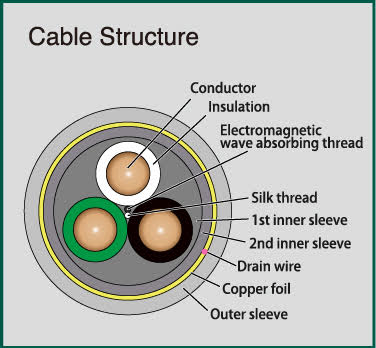
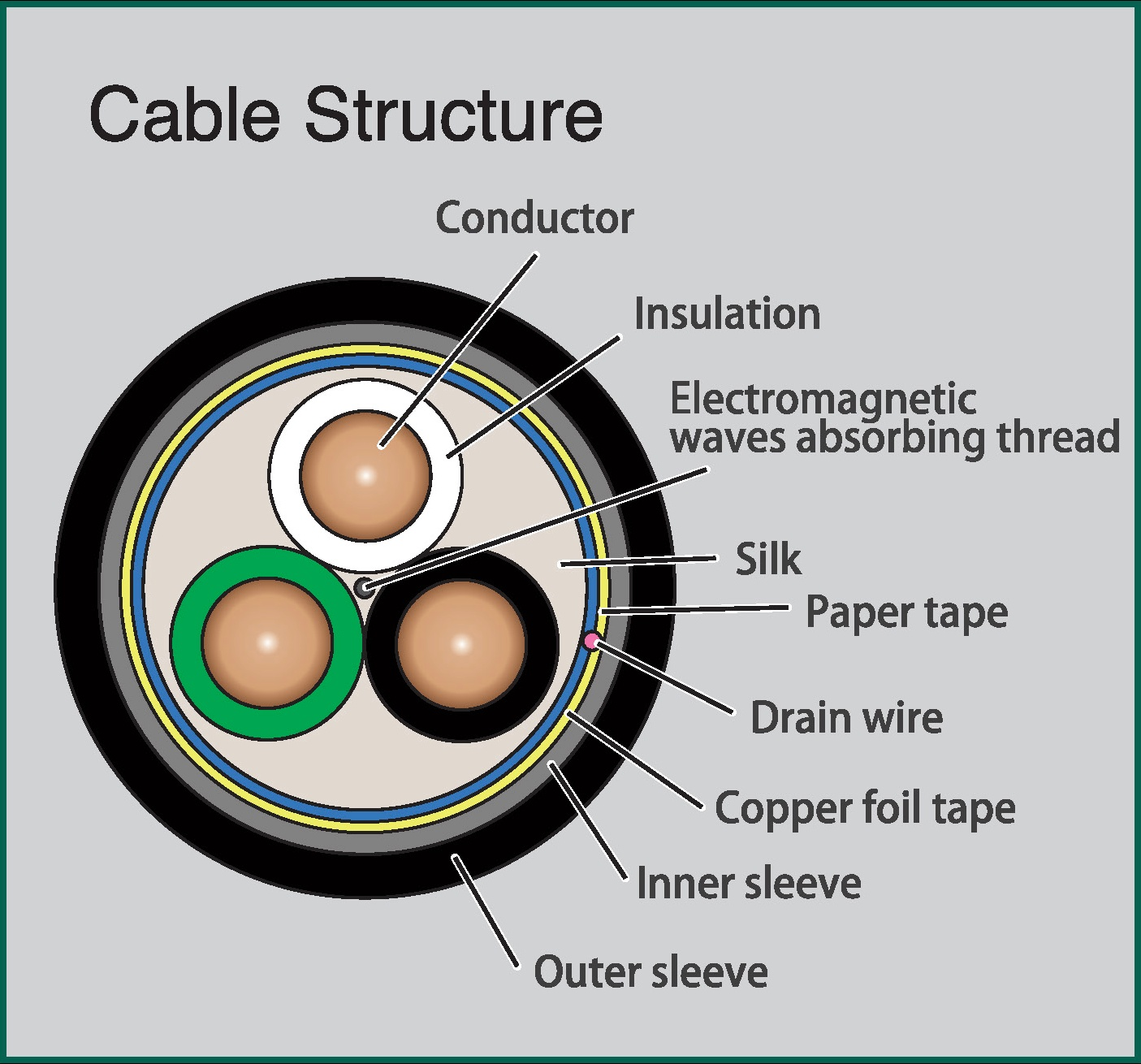
Let’s have a look at the cross-sectional view of the Purosangue and the Leggenda, which precedes it.


PUROSANGUE 

From Acrolink's official website.

LEGGENDA


From Acrolink's official website.


Like the Leggenda, the Purosangue is a 10 AWG power cord based on 7N purity D.U.C.C. copper wires (Live and Neutral) and 4N copper conductors (ground).


Visually, the biggest differences are the change from the glossy cream PVC outer jacket to matte black Polyolefin, and the striking blue Duralumin connectors in a shade similar to Blu Tour De France (I saw what you did there Acrolink!).


Internally, the single silk thread running in the center of the Leggenda now fills the space between the outer jacket and the conductors. 


The connectors share a similar design to the plugs used in Acrolink’s flagship Mexcel range save that they are shorter and omit the carbon fiber sleeve. Like the plugs used for the Leggenda, the Beryllium copper blades are Rhodium and Silver plated. 


Purosangue (top) vs Mexcel 8N-PC8100 (bottom).


In Use


The Purosangue has a similar diameter to the Leggenda, and is just a shade thinner at 14.7mm  diameter (vs. 15.7mm). It is also more flexible, but in practical applications, the cables route and handle similarly.


The black Polyolefin outer jacket scuffs more easily compared to the PVC material used for the Leggenda. From experience with other Acrolink models, it will become a bit sticky in Singapore’s tropical weather over time, and the cable lettering rubs off easily too. 


No stress here except for the lettering.

Sound


The Purosangue was tested in both my main and secondary setup. In my main setup, the cable was used with a Conrad Johnson ART27A power amp, and a Gustard A26 DAC. In the secondary setup, the Purosangue was connected to a Schitt Aegir power amp. The sonic differences were more stark in my main setup while the Schitt Aegir seemed less sensitive to power cord changes.


Tonally, I found the Purosangue quite close to neutral, with a slight bias towards warmth. The signature Acrolink strengths are there in spades, with extended and silky highs and refinement across the frequency spectrum. The Purosangue distinguishes itself from earlier models with a tight and propulsive bass, much improved dynamics and a sharper edge. The forceful bass reminded me of some of the Mexcel models, but in a lesser dose. The extra bass weight, together with the denser tone makes this the warmest sounding 4030 variant to date. 


Midrange performance is smooth and fluid like the Leggenda, but with more detail and expressiveness. The image size of vocalists is tighter and more focused than the Leggenda but not as pinpoint as the Anniversario. If the Leggenda could be said to be voiced like a tube amp, then the Anniversario would be likened to a good class A/B solid-state amp, and the Purosangue, a class A solid-state amp.         


Compared to the Leggenda and Anniversario (both terminated with Oyaide AP/C 004 plugs), the Purosangue sounds quicker, more dynamic and with higher tonal contrast. The soundstage is more deeply layered, which gives superior perception of depth and dimensionality. Returning to the Anniversario and Leggenda confirmed that the two older cables sounded spatially flat in comparison.


An Acrolink Mexcel 8N-PC8100 Performante power cord served as the final comparison. The Mexcel was superior in every way, but I was impressed at how much fight the Purosangue brought to the ring. It wasn’t a first-round knockout, and the Purosangue kept the Performante on its toes for a few rounds before deciding to surrender. The Mexcel’s low noise floor, dynamic power and microdetail was something that the Purosangue couldn’t match. However, value-wise, the Purosangue wins hands down.


Technically, the Purosangue significantly betters its predecessors. Audiophiles sensitive to brightness may prefer the more organic sound of the Leggenda, but the Purosangue should be a good upgrade for most 4030 owners.  


Conclusion


If you want close to Mexcel performance, but don’t wish to spend that kind of money, this should be at the top of your shortlist. The Purosangue compromises little and should fit comfortably in most systems. It’s nice to see that Acrolink continues to push the boundaries of performance for its more modest models. 


Thank you X-Audio for arranging for this review.  


Acrolink 7N-PC4030 Purosangue power cable

Promotional Price

1.5m factory terminated cable - S$980

Bulk wire - S$250/m


X Audio 

201 Henderson Road

#06-13/14, Apex@Henderson

Singapore 159545

http://xaudio.sg


Saturday, November 7, 2020

Acrolink Mexcel 7N-PC9900 Power Cord

Introduction

The 7N-PC9900 is the latest version of Acrolink's flagship power cord, replacing the PC9700. According to Acrolink, the PC9900 is an upgraded version of the PC9700 and features new special shielding technology. 


Description

Visually and reading off the specifications sheet, the PC9900 and PC9700 are near identical twins. The Live and Neutral conductors are the same D.U.C.C. Stressfree 7N wires consisting of 50 strands of 0.32 mm diameter conductors, while the ground is similar except the wires are made from super-anneal 4.5N copper. 

The shield is described as polyurethane enameled 4N copper braid with special shielding technology - carbon fabric sleeves. In comparison, the PC9700 uses the same copper braid combined with semi-conductive carbon tape. 

Otherwise the PC9900 looks and feels the same, with a diameter of 16 mm and identical resistance and capacitance values. 


I no longer had the PC9700 on hand so I could not compare the two models. Instead, I used the 8N-PC8100 as a baseline for comparison instead.

Sound Quality

Acrolink Mexcel users expect the finest levels of resolving power and suppressed noise floor, which the PC9900 delivers in spades. 

The PC9900 has extremely high levels of resolution across the frequency range, with tight and powerful bass lines, and high frequencies that are extended and clean. In typical Mexcel fashion, this is delivered in very quick and focused transients, with a natural decay. Due to the very low noise floor, the PC9900 is almost like delivering a jolt to your system, giving it a sudden boost in contrast and dynamic range. 

Tonally, the PC9900 sounds similar to the PC9700 (based on memory). A quick read of my previous review of the PC9700 provides more insight into the character of both the PC9700 and PC9900. However, the PC9900 offers subtly improved resolving power with a little bit more focus and drive. I noticed that the Mexcel twins differ in how the human voice is presented. While both cables have more sweetness in the midrange compared to other Mexcel models, the PC9900 has a silkier and more fluid delivery. However, this comes at the expense of some snap and presence.

Comparisons to the PC8100 proved interesting. Unlike the PC9700, I would consider both the PC8100 and PC9900 to be on par with each other. The PC9900 is like using a computer monitor with higher resolution. The PC8100 makes do with lower resolution, but with more colour contrast, and a slightly warmer hue. Your choice of poison boils down more to taste. If you like a bolder presentation with more meat and flavour, the PC8100 fits the bill. The PC9900 is perfect for the palate that favours microdetail and a more refined and sophisticated presentation. If you like your Japanese whisky, think of the PC8100 as Nikka, and PC9900 as Yamazaki.

Conclusion

Acrolink Mexcel power cords are one of the finest products in the industry and come with a strong personal recommendation. While they are expensive, the level of performance delivered is very reasonable. I would have hesitated to say this some years ago, but a quick look at audio magazines and websites shows that flagship cables from the competition can even cost multiples of the PC9900 - Highly Recommended.

A big thanks goes out to X-Audio for arranging for the review sample.


Acrolink Mexcel 7N-PC9900 Power Cord
Price : S$ 5,500


X-Audio
1 Jalan Anak Bukit 
#01-01S, Bukit Timah Plaza
Tel : 64662642


Sunday, March 29, 2020

Acrolink 7N-PC 4030 Leggenda Power Cord

Introduction

The PC 4030 is the workhorse of the Acrolink power cord range, being affordable and offering great performance for the money. Available in off-the-reel form, you can choose to terminate it with the plugs of your preference. 

I had previous written about the original 6N PC-4030, 7N PC-4030 II and the Anniversario. The Leggenda is the latest version of the PC 4030. Let's see whether this is destined to be the stuff of legends.

Description

The Leggenda uses the same copper conductors as the Anniversario - 50 strands of 0.37 mm diameter strands of 7N DUCC copper for the Live and Neutral conductors, and 4N copper for the Earth conductor. However, squalene oil is applied to each strand of copper. Squalene oil is a popular ingredient in skin-care products, and it's use for Audiophile products is not new. Furutech and Nanotec have been using squalene in some of their products for many years, albeit with added precious metal particles suspended. I sincerely hope no sharks were harmed in the production of these cables - shark liver is a rich source of squalene and is a traditional harvesting source.

Otherwise, the Leggenda is physically similar to the Anniversario. It is as flexible and easy to handle, despite being slightly thicker (the Leggenda's jacket has a diameter of 15.7 mm, vs 14.7 mm for the Anniversario). The shield is a thin copper foil, with a fine drain wire that is designed to test your dexterity and skill as a cable ninja. I terminated a 1.5 m cable with Oyaide A/P 004 plugs, with the drain cable attached at the AC outlet end. I happened to also have the Anniversario on hand, terminated with the same plugs.  

Sound Quality

Squalene treated cables have a polished and wet signature to them, and the Leggenda exhibited a similar tone during the first few days of run-in. Unlike Nanotec and Furutech cables, the Leggenda has a more agile feel, with a less intense golden glow. The tone continued to lighten and stabilised after a few weeks of use (including a few days with dedicated burn-in devices).

The Leggenda has a balanced tone, much like the Anniversario, with an even hand throughout the frequency range. Once fully run-in, the effect of the squalene is very subtle and best described as a natural sounding flow between notes. If you found the Anniversario too dry, and the older 6N and 7N versions of the 4030 too wet, this is probably just right.

I also found the Leggenda to have more push and dynamic contrast. Bass had that little bit more power and authority, while music had a more incisive edge to it. In a way, the Leggenda moves closer in quality to the top-drawer Mexcel series, although it lacks the level of quietness of Mexcel cables. Typically improvements of this nature come at a price - forcefulness requires a trade-off from musicality and midrange smoothness. The fact that Acrolink managed to avoid this is a certain indicator of fine audio wizardry.

Resolution wise, this has a slight edge over the Anniversario, with better retrieval of micro details, and a more expressive midrange. Soundstaging is also wider, although this may be component dependent. It is very noticeable when used on my amplifier, but less so with my Melco NAS / streamer. 

One key difference is vocal reproduction. The Leggenda has more midrange presence, with slight warmth and an innner glow. As mentioned earlier on, this is done without any smoothing over - the human voice remains communicative, expressive and detailed. 

The evolution of the 4030 range is an interesting one. The 7N-4030II in my view, remains the most musical albeit coloured cable. It has the silkiest high frequencies, with very prominent air and decay. The Anniversario has the most "studio-like" tonal balance with a drier and more analytical presentation. The Leggenda sits squarely between the Anniversario and 7N-4030II, with a judicious mix of both of their strengths.

Conclusion

Taste will very much determine which 4030 model is your pick. The Leggenda is my pick and caters best to my taste. Considering that the price increases over each model have been very modest despite large strides in improvement, the Leggenda is an unequivocal Best Buy. Outstanding performance at a great price - that is definitely the stuff of legends !  

Price : TBD

X-Audio Pte Ltd

Bukit Timah Plaza
1 Jalan Anak Bukit #01-01S
Singapore 588996
Tel : 6466 4624     


Saturday, April 27, 2019

Acrolink 8N-PC8100 Performante Power Cable

Introduction

Just worked yourself to the bone saving your precious pennies for the flagship Acrolink 7N-PC9700 power cable ? The bad news is that Acrolink has launched a limited edition model, the 8N-PC8100 Performante Cable. I certainly didn't see this coming, especially so soon after the launch of the 7N-PC9700 ! Such is life, and we can only see whether this new model (limited to only 99 pieces in the world)  will dethrone the King of the castle.


Description


Acrolink has somehow managed to retrieve enough stressfree 8N copper material from it's secret vault to launch this limited edition series (the current lineup uses 7N DUCC conductors). Technically, the PC8100 is closer to the PC6700, with both using 50 strands of 0.37 mm diameter copper conductors for neutral and live conductors, as well as polyolefin, tungsten and amorphous powder as filler (the PC9700 included carbon powder). The shield is different, with the use of copper foil tape and silver plated copper braid, instead of carbon tape and enameled copper braid on the PC9700.


Visually and handling wise, the PC8100 and PC9700 are similar, with identical plugs, and flexibility (or lack thereof).


Pricing will depend on your market, but be assured that the PC8100 will cost significantly more than the PC9700. In Singapore, the local dealer X-Audio is offering this cable for S$ 5,500 (or about slightly more than US$ 4,000).

Sound Quality

Admirers of the Acrolink Mexcel house sound will not encounter any surprises - the PC8100 treats it's audience to extended and silky highs, with a refined presentation that is precise and quiet.

A concise way to describe the PC8100 is that this is the progeny of a union of the PC9500 and PC9700, with a well-struck balance that highlights the strengths of both Mama and Papa cable. The PC8100 has the well-defined strength and muscularity of a bodybuilder, and the speed, elegance and grace of a ballerina ! Click on these links to see my previous reviews of the PC9500 and PC9700.  

But stopping short at this description would be doing the PC8100 a disservice - it is able to do everything slightly better than the PC9700, with a slight edge in resolution, micro-detail and background quietness. Throw in the low frequency authority and dynamics of the PC9500, and you have it all - at a price (financially). 

Your choice of poison really depends on taste. The PC9500 has the most powerful sound, albeit with a more raw edge to it - perfect for the rockers. The PC9700 has the most laidback and sweet tone - perfect for small scale jazz and classical works, or vocals. The PC8100 takes the middle road, which is great if you listen to both ends of the spectrum, but an audition is a must - it may be too polite for the headbangers and too forceful for the pipe and slippers crowd. The level of improvement compared to the PC9700 is more evolutionary than revolutionary, and the PC9700 owners should be able to sleep soundly at night. For the prospective Mexcel purchasers sitting on the fence though, this cable is really the one to have in my view.

Conclusion

The PC8100 demonstrates Acrolink's commitment to pushing the envelope of what is possible from power cords. If you move fast, you just could be one of the lucky owners of this limited edition flagship cable. A big thanks goes out to the guys at X-Audio for making this review possible.


Acrolink 8N-PC8100 Performante Power Cord
Price : S$ 5,500 

X-Audio Pte Ltd
Bukit Timah Plaza. 
1 Jalan Anak Bukit, #01-01S
Singapore 588996
6466 2642 


Friday, September 22, 2017

Acrolink Mexcel 7N-PC-6700 and 7N-PC9700 Mexcel Power Cords

Introduction

Acrolink's new Mexcel range of power cords landed in Singapore last month. Is it time to break the piggy bank ? Readers may want to take a moment to read my previous review of the Mexcel 9500 and 7500 power cords here. 

For the unfamiliar, the Mexcel series is the flagship range of cables for Acrolink. Mexcel cables are particularly popular in Asia where they enjoy considerable popularity amongst audiophiles that demand the highest levels of performance. 

Description

The Mexcel power cord range was originally made up of three models, the PC6100, 7100 and 9100. The second generation introduced a fourth member, the PC5100 as an entry level model. At the moment, only the two power cords on review here have been released in the fourth generation lineup of Mexcel power cables.

Mexcel power cords have a mind of their own. They do not take kindly to manipulation or threatening instructions. Their girth and stiffness are not the worst in class, but a little bit of effort and gentle persuasion are required to route them into your desired position.  

I liked the new colour scheme introduced for the PC6700, a very nice hue of green that reminds me of Emerald. A nice change from the boring white jacket used in the PC6500 and 6100. The PC9700 on the other hands looks just like it's predecessor, the PC9500.

Both cables are of similar diameter (16mm) and stiffness. My imagination suggested that the 6700 was a touch more flexible, but I doubt anybody would notice any practical difference.

The neutral and live conductors of the 6700 are made up of 50 strands of 0.37mm diameter 7N DUCC copper, while the earth conductor is made up of 50 strands of 0.37mm diameter 4.5N soft copper. The 9700 on the other hand uses finer strands of 0.32 mm diameter 7N DUCC copper. Strand count is the same at 50 strands per conductor. 

DUCC (Dia Ultra Crystallized Copper) is a proprietary annealing technology used by Mitsubishi Electric, Acrolink's parent company. It is described as stress-free (do you give the conductors a single malt before annealing ?) and results in an ideal orientation of the wire's copper crystals.

Both cables are armoured (shielded) to the hilt, with full braid shielding. The 6700 adds a mylar foil shield to that, while the 9700 uses semi-conductive carbon tape. A electromagnetic wave absorber thread and a silk thread run through the centre of both cables. The filler material in between the conductors and the outer jacket consist of a compound designed to reduced vibration and electrical noise. The 6700 uses a combination of polyolefin, tungsten and amorphous powder, while the 9700 adds carbon into the mix. 

In my listening experience, Mexcel power cords have astonishingly low noise-floor - all that magic powder certainly works !


Sound Quality


PC-6700

I will admit that I was not really a fan of the Mexcel 6000 series based on my brief ownership of the PC-6100. Nothing really wrong with that cable, but I did not find it to be as outstanding as it's illustrious siblings. I willingly retract that statement for the 6700. At half the price of the 9700, it delivers exceedingly high performance for the price. It's nice to think that this power cord is not unattainable for the typical audiophile.

The 6700 is a quiet, precise cable that plays it close to the path of neutrality. It is not dead-centre neutral, and could be said to have a soft expressive tone.

Timing is spot-on and no issues should be encountered keeping up with faster types of music. Bass is punchy and tight. It avoids the fuller mid-bass of the Acrolink 6N-4030 II and 7N-4030 III, which is likely to be a contributing factor to it's timing supremacy.

Midrange is presented in a natural fashion, with a subtly laidback character. Despite a total absence of cable-added grain, the 6700 is very expressive, with various levels of shading and nuances that escape lesser cables. 

High frequencies have always been an Acrolink strength. It is no different here, with very extended and refined highs. In this respect, I have always considered Mexcel cables to a class leader.

Soundstaging is also excellent, with precision placement of instruments and voices in the mix. This comes with both excellent width, depth, and dimensionality - each voice and instrument subtly expands in its individual acoustic space. 

PC-9700

Leapfrogging to the top dog gets you the 6700 on steroids, with significant improvement in a number of areas.

The most noticeable improvement is the driving force in bass lines. The 9700 goes deeper, and with more intensity and articulation.

This intensity is applied in more gentle strokes to the rest of the frequency spectrum, although for the midrange, it is enough to result in a subtly more forward staging of vocalists. You also get an improvement in quietness, expressiveness, retrieval of micro-detail, and more dimensionality. 

Comparisons with the 9500 prove interesting. The 9500 has more raw energy and exuberance, while the 9700 reflects a more matured and cultured approach. It was as if the 9500 spent some time on self-reflection and decided to channel its excessive energy into cultured and genteel activities. If you felt that the 9500 was a little bit too much in terms of tonal intensity and drive, the 9700 would be a lot more palatable. 

Assuming that the 9700 does not push your system over the edge, it is certainly the better cable. Audiophiles love power, drama and refinement, especially when it comes all in one package. I've heard cables that cost even more than the 9700, but none have captivated me me to this degree. Consider me sold on the 9700 !

If you currently own the 9500 and love it's energy levels and intensity, consider your wallet safe. If you were not convinced by the 9500 and preferred the gentler approach of the 7500, consider an audition of the 9700 to be mandatory.

Conclusion

Acrolink has outdone itself once again. It is impressive that they continue to raise the bar of performance and I look forward to seeing the rest of the fourth generation line-up. The 6700 proved to be a surprise. I did not try the rather short-lived 6500, so I can only speculate on the improvements made. In any event, I love both cables on review here - Highly Recommended. The 6700 in addition gets my stamp of approval for Best Buy.

I would like to thank X-Audio, the local dealer for Acrolink for arranging for this review.

Acrolink 7N-PC6700 Anniversario Power Cord
Price : S$ 2,500 - 1.5 m

Acrolink 7N-PC9700 Mexcel Power Cord
Price : S$ 4,500 - 1.5 m

X Audio Pte Ltd
Bukit Timah Plaza. 
1 Jalan Anak Bukit, #01-01S
Singapore 588996
6466 2642 

Acrolink 7N-PC4030 Anniversario

Introduction

Here is a special edition of the ever popular Acrolink 7N-4030 power cable. This has been one of my favourite cables over the years. You may want to have a look at my earlier posts on the 6N-4030 and the 7N-4030II.


Description

The Anniversario is available both in factory terminated version (the Anniversario CB) and off-the-reel. A smaller gauge version is also available in the form of the 7N-PC4020 Anniversario.

The Anniversario continues to use 7N DUCC copper conductors. However,  this model uses larger diameter copper strands but with less strand count compared to the it's predecessor (50 strands of 0.37 mm diameter copper vs. 100 strands of 0.26 mm diameter). The outer copper foil shield gets a drain wire which permits you to ground the shield if desired. 

The black jacket of the 7N-4030II had a rubbery feel to it, and the very fragile wording reminded me of some of my NOS vacuum tubes - a touch and that was the end of the print ! I much prefer the new jacket that looks better and should be trouble free. According to Acrolink's website, the Anniversario uses a UV resistant urethane jacket.  


I purchased my Anniversario off-the-reel and terminated it with Oyaide P/C 004 plugs, which use Platinum and Palladium plate over Beryllium Copper alloy blades. I consider these plugs to be extremely resolving and very neutral. I left my handiwork to burn-in over a couple of weeks before doing any serious listening.

Sound Quality

Owners of the 6N-4030 would be in for a rude shock while 7N-4030II owners would probably consider the Anniversario to be an evolution rather than revolution. Tonally, the Anniversario is close to neutral, stripping the excess fat of the 6N-4030. Those hoping for the mid-bass bloom and the extended decay of the previous generation models will be disappointed. This is a lean mean fighting machine - think of those sinewy lightning fast mixed martial arts exponents and you get the idea.

In no way though is the Anniversario hard sounding or harsh. Midrange remains grain-free and slightly laidback, while both low and high frequencies are well controlled and extended. However, the bass quality of the Anniversario is quite different, with a drier, tauter character. Thankfully, extension and articulation still remains top-notch. I found the midrange to have a subtly softer quality with more expressiveness (very much like a lesser form of the Mexcel 6700 power cord). Similarly, high frequencies have less "push" compared to the previous model, with less of a leading edge, and shorter decays. 

The eagle-eyed may have noticed from Acrolink's website that the Anniversario and the Mexcel 6700 use similar conductors. The differentiating qualities between the two are added precision and a lower noise floor in favour of the Mexcel. The Anniversario places instruments and voices around the soundstage in a slightly more diffuse manner. 

The Mexcel remains by far the better cable, but with a much higher price tag. I appreciate that Acrolink has offered a really nice alternative to audiophiles who may not have the ability to afford the Mexcel range, or the desire to spend that much money on cabling. 

Conclusion

We have another winner here (the only loser being your wallet) ! The Anniversario gets an easy recommendation and in view of it's modest price - a Best Buy. 


I would like to thank X-Audio, the local dealer for Acrolink for arranging for this review.

Acrolink 7N-PC4030 Anniversario Power Cord
Price : S$ 600 - 1.5 m (Factory terminated)
Price : S$ 175 / m (off-the-reel)
X Audio Pte Ltd
Bukit Timah Plaza. 
1 Jalan Anak Bukit, #01-01S
Singapore 588996
6466 2642 


Saturday, October 26, 2013

Acrolink Mexcel 7N-PC7500 and 7N-PC9500 power cords

I was at the local dealer's showroom looking at a new shipment of power cords from Acrolink of Japan. The dealer had a large smile on his face as his enthused over the virtues of the new Mexcel range.

I cautiously asked about the pricing, and the dealer nonchalantly rattled of some mind boggling numbers. Either audiophiles have become very rich over the years, or the dealer had serious mis-estimates about the state of affairs of my bank account.

He invited me to listen to the 7N-PC7500 which was currently being run-in, and had on hand the much older model, the 7N-PC 7100. He disconnected the 7500 and hooked up the 7100 for a quick listen - smart move. Mentally, I was hoping that both cables would sound the same. I already had the PC7100 at home, and spending even more money was not at the top of my wish list.

I listened to a few familiar tracks through the wonderful setup for the day, the beautiful Vivid Giya G3s powered by amplification from Technical Brain, and fronted by a digital source from Accustic Arts.

"Hate it, hate it, hate it.....crap, No!  I love it, love it, love it" - resistance was futile. I had fallen in love with the system in front of me. I mentally ran through the cost of the system in front of me, and luckily, my mental calculator ran out of digits. My wallet was safe - at least from the electronics in front of me.

The dealer switched the cables, and like a Cheshire cat, his grin became wider and wider, until his body slowly faded and disappeared into the background, leaving nothing but his grin. OK, that never happened - after his grin, he went back into his personal office to leave me alone with the system.

To cut the long story short - I bought the cables on the spot. At that point of time, the PC9500 had not yet been released. I would later go back to buy those too some months later, the result of some egging on from a particularly mischevious individual from Poland (Marcin, this is your fault !)

Carbon fibre plugs with blades made from Beryllium copper and double plated

The PC9500 on the left, and PC7500 on the left. Both have similar diameters
To be very frank, the comparison between the 7100 and 7500 was absolutely crushing (apologies to all other 7100 owners out there). The 7500 had far greater incisiveness, drive and dynamics. The human mind is an interesting thing. The 7100 was already highly regarded and regarded by some as the best thing since sliced bread (with the exception of the 9100 of course). Then two generations later, the 7500 convinced the audiophile's mind that the 7100 was actually broken all along.

The 7100 in comparison sounds grey - music is presented in many pastel shades of a watercolour painting. The 7500 is oil on canvas - bright, vivid and bold strokes, but never to the point of looking like garish technicolour.

Physically, both the 7500 and 9500 are of similar gauge and flexibility. Relative stiffness requires fairly large turning radiuses. This could cause issues with tight setups and lightweight equipment. Acrolink has also dropped the beautiful wooden box that accompanied it's older models in favour of a more eco friendly cardboard box. I had grown rather fond of the wooden display box very much and will miss it, but compromises have to be made to save some trees.

Sonics wise, the 7500 and 9500 sound more alike than different. The notable gains moving from the 7500 to the 9500 are a greater sense of immediacy, incisiveness and low end authority. However, I am not convinced that the 9500 is the perfect power cord for all. My Calyx Femto preferred the 7500 to the 9500, while the converse was true for my Conrad Johnson preamp.

Before moving on to the sonics of the dynamic duo here, I would like to take some time to address the pricing of these cables and the general trend of the industry. These cables are not cheap. Here in Singapore, they go for a discounted price of about USD 3,000 and USD 4,200 each. Power cables in this price range would have been mostly unheard of 10 years ago. Today, these figures may not even raise an eyebrow. There is an active discussion ongoing in the local forum at the moment on power cords that carry price tags close to USD 10,000. In some cases, they are being paired in systems where the single power cord outprices the cost of some of the equipment.

The value proposition is a personal one - and best left to the purchaser. On one hand, I question the wisdom of spending a disproportionate amount of one's budget on cabling. On the other hand, I know better than to dismiss the importance of cabling. My own experience is that as you move up the ladder, the importance of carefully matching cabling (which is not always related to price tag) increases.

The 7500 is a cable with good drive and dynamics. Unlike some of the lower end Acrolink offerings, which have slightly polite bass and a subjectively "slower" sound, the 7500 is tight, fast and tuneful. It combines the traditional Acrolink strengths - extended and refined highs and supreme control over staging, imaging and separation with considerable energy, intensity and drive.

The 9500 goes even lower, with slightly more slam. The extra money also earns you even more quietness and control - staging and imaging are even more precise than the 7500. The 9500 has a slightly snappier sound to it. Ride cymbals still crash and fade gracefully with the 7500. The 9500 has slightly more emphasis and a warmer tone of the initial strike. This degree of extra energy present in the 9500 is most obvious in percussion instruments including the piano, where the hammer strikes and soundboard resonance are more vibrant and dynamic.

You can comfortably tick off all the other boxes regardless of which model you choose :- resolution, staging, imaging, presence, dynamics, etc - you get it all. These are very serious power cords for equally serious money.

I feel a bit guilty waxing lyrically about something so expensive, but I really like these power cords ! I highly recommend that you have a listen to them if you are looking for power cords in that price range. 

DIY AC Power Cables

A short round up of some popular (and well, not so popular) AC Power Cables available off the reel for DIY projects.

1. Acoustic Revive Powermax 5000

This is a nice purple cable and is reasonably easy to handle in terms of flexibility, stripping the insulation, etc.

Otherwise identical to the Power Max Standard offered by Acoustic Revive, the Powermax 5000 lacks the carbon infused mesh used in the retail offering. Wire gauge is 3.5 square mm per conductor, and the sheath is infused with tourmaline.

This is a very smooth and inoffensive cable. It has a laidback and very refined sound that makes it perfect for countering digital and/or solid state glare. The level of detail is quite good but this cable lacks dynamic snap and drive.

2. Acrolink 7N-4030

A personal favourite of mine, the 7N version of the 4030 is far superior to its 6N predecessor. Apart from tighter bass and better dynamics, the 7N version has superior high frequency extension and control.

High frequency extension and air is almost a given for an Acrolink product, so no real surprises there. Rythmically, the timing gang may still find this cable subjectively slow sounding. The high frequencies are extended in a natural way and slightly wet sounding, which makes for a less fatiguing presentation.

3. Furutech FP-Alpha 3

A sweet cable that is otherwise quite neutral. It lacks the bass slam and deep extension of the Oyaide Tunami and the high frequency extension of the Acrolink 7N 4030. Otherwise, this is quite a neutral cable with very little attention being called to any particular frequency.

It lacks a bit of bloom on the mid-bass and transients are slightly soft. I think it sounds better with bigger sounding plugs like Furutech, as compared to Oyaide.

4. Nanotec Golden Strada #305

Any cable skeptic should listen to this cable. Infused with gold and silver particles in oil from liver of a deep sea shark, this should leave both the electrical engineers (who mostly don't believe in cabling anyway) and animal conservationists shaking their heads in dismay.The #305 has a distinctive signature which is readily discernible whether used on my power amp, preamp or Mac mini.This cable imparts sweetness, liquidity and smoothness to the most stubborn of systems.

I personally find it too heavy handed, making most music sound similar in presentation. I don't mind my vocal tracks or chamber music presented this way, but it is a bit too much when Meatloaf sounds too sweet and nice.

5. Oyaide PA-23

This is the thinnest cable of the lot and is easy to terminate, even into a standard UK mains plug. Technically, this is similar to the Tunami with PCOCC-A conductors, carbon impregnated damping and a copper foil shield. The PA-23 uses 2 square mm conductors.

Sonics wise, the PA-23 is day, while the Tunami is night. The PA-23 sounds faster and more extended than the Tunami but lacks bottom heft. It's thinner midrange and lack of control over high frequencies (it has a tendency to become slightly messy when the track mix gets heavy) require careful matching.

6. Oyaide Tunami

This is the only cable in the group which I really hate to terminate - the conductors are far bigger than anything else here, at 5.5 square mm conductors.

The Tunami has powerful and extended bass. The rest of the frequencies are very quiet, but a bit dark sounding. I prefer to use this on amplifiers compared to source equipment, where it sounds too dull. However, it sounded quite dead on the Calyx Femti amplifier, which sounded far better with the Acrolink 7N-4030.

Conclusion

An interesting round-up - some of the cables performed quite well on specific equipment, but fared badly on others. The plug used can be quite critical in tuning the balance of the cable to your exact liking. It may be useful to have a look at my shoot-out of AC receptacles and plugs too - click here.


Sunday, May 27, 2012

Acrolink 7N-S1000III and 7N-S1400III Speaker Cable

Introduction

The Acrolink 7N-S1000III and 7N S-1400III are part of Acrolink's new line up of cables for 2011, and also an introduction of 7N purity copper into their lower range of cabling.

Utilising similar geometry to their predecessors, the S-1000 / S-1400 have two widely spaced conductors in a flat shaped dielectric. Looking at the design, this will most likely result in fairly high inductance but very low capacitance.

The main difference between the S-1000 and S-1400 is conductor gauge, the S-1400 having more than double the number of strands of copper in each conductor leg.

S-1000III - Picture from official website

S-1400III - Picture from official website


Sound Quality

Acrolink users are unlikely to encounter any surprises here. Great midrange, with excellent high frequency extension and control, with emphasis on the "air" around instruments and the sense of acoustic space.

The S-1000III subjectively sounds faster than the S-1400III. The latter has a harmonically rich mid-bass and fuller human voice. Image sizes are also larger compared to the S-1000III which is more pin point. On female vocals in particular, sibilance is well handled by the S-1400III, which has a smoothness that tends to reduce sibilance.

In terms of setup, the S-1000III is easier to match partnering equipment in most setups. Care is needed with the S-1400III to avoid a loss of speed and excessive mid-bass.

I never had the 6N S-1000II in my setup, but based on the S-1400, the change from 6N to 7N conductors brings about improvement in micro detail, high frequency extension and control. Otherwise, the cables are more an evolution than a revolution in character.

Termination

A word of warning on termination. I bought the S-1400III pre-owned. The previous owner had terminated it in gold banana plugs (the manufacturer of which shall remain un-named). I thought that the cable sounded rythmically slow and overly warm. High frequency detail and extension were also obscured compared to the S-1000III and even my old set of 6N S-1400II.

Re-terminating the connections with Oyaide spade (SPSL) and banana plugs (SRBN) brought speed and clarity back to the cable. The SPSL spades are made of brass, and plated with silver, followed by platinum. The SRBN are also made of brass, but plated with silver, followed by rhodium.

The only other experience I had with dramatic differences in termination, was with the Mogami 2803, which greatly favoured Eichmann Bullet Plugs over other quality terminations like the Neutrik Pro-Fi.

So folks, please pay attention to your terminations for this cable.

Conclusion

The 7N series is a great upgrade for existing users of the older 6N series. If you are new to the Acrolink line, a trial before purchase is warranted as the balance and character may not be for everyone.